
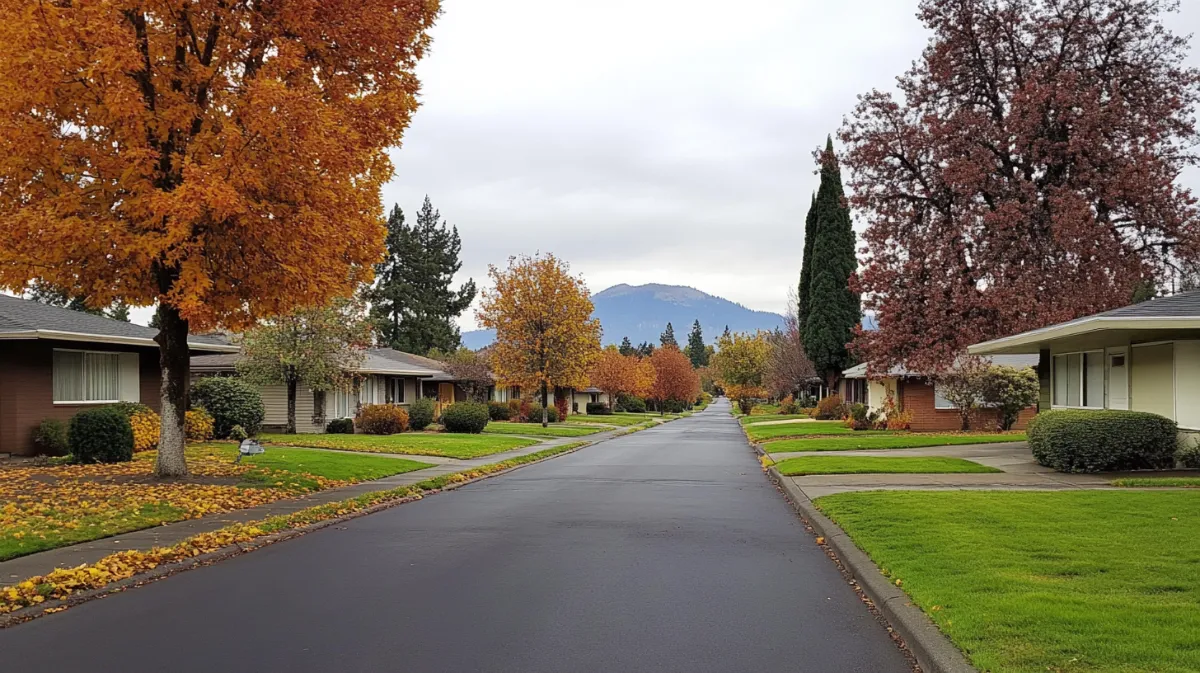
Medford sits at the bottom of the valley, and the air sits with it. In a bad August the smoke from fires in the Cascades and Siskiyous pools here for weeks. In December and January, inversions trap cold air, fog and chimney smoke over the city for days at a stretch. Add summers that run past 100 degrees, and you get heating and cooling systems that run hard most of the year and pull in a lot more than clean air. The fine dust that ends up in a Medford duct system is a mix of ash, pollen from the orchards and farm fields, and ordinary household lint. It builds up on a schedule of its own, whatever the calendar says.
We clean the whole system in one visit: supply and return ducts, registers and the trunk lines, using a vacuum that keeps everything under suction while each run is brushed out. Most people add dryer vent cleaning while we're there, and if the furnace hasn't been opened in years, HVAC system cleaning takes care of the blower and coil. Call us with a rough count of your vents and we'll give you a free estimate.
Old East Medford and New Southeast Medford
The houses on the older east side streets, many built before central air was common, tend to have duct systems that were added or reworked over the decades. That leaves mixed materials, awkward transitions and joints sealed with tape that gave up long ago. Those gaps pull in crawl space and attic air, so the ducts get dirty from the outside as well as the inside. We clean these carefully and photograph any runs that have come apart so you can decide what to fix. The newer neighborhoods off North Phoenix Road have the opposite issue. The ducts are tight and well laid out, but the system often ran during construction, and we pull out sawdust, drywall dust and the occasional lunch wrapper. West Medford's ranch homes from the fifties and sixties fall in between, usually with a furnace in a hall closet and short metal runs under the floor. The same mix of old and new shows up next door in Central Point.
Dryer Vents in Medford Homes
Where the laundry sits tells us most of what we need to know. In older Medford houses the dryer is usually on an outside wall or in the garage, with a short vent that stays fairly clean. In two-story homes and many newer floor plans, the laundry room is upstairs or in the center of the house, and the vent runs through the attic to a roof cap. Those long runs lose airflow at every bend, and the roof cap screens catch lint until they close off. If your dryer has started needing a second cycle, the vent is the likely cause. We clean the full length, clear the cap and test the airflow before we leave. Homeowners in the hills toward Jacksonville often have the same long-run setup.