
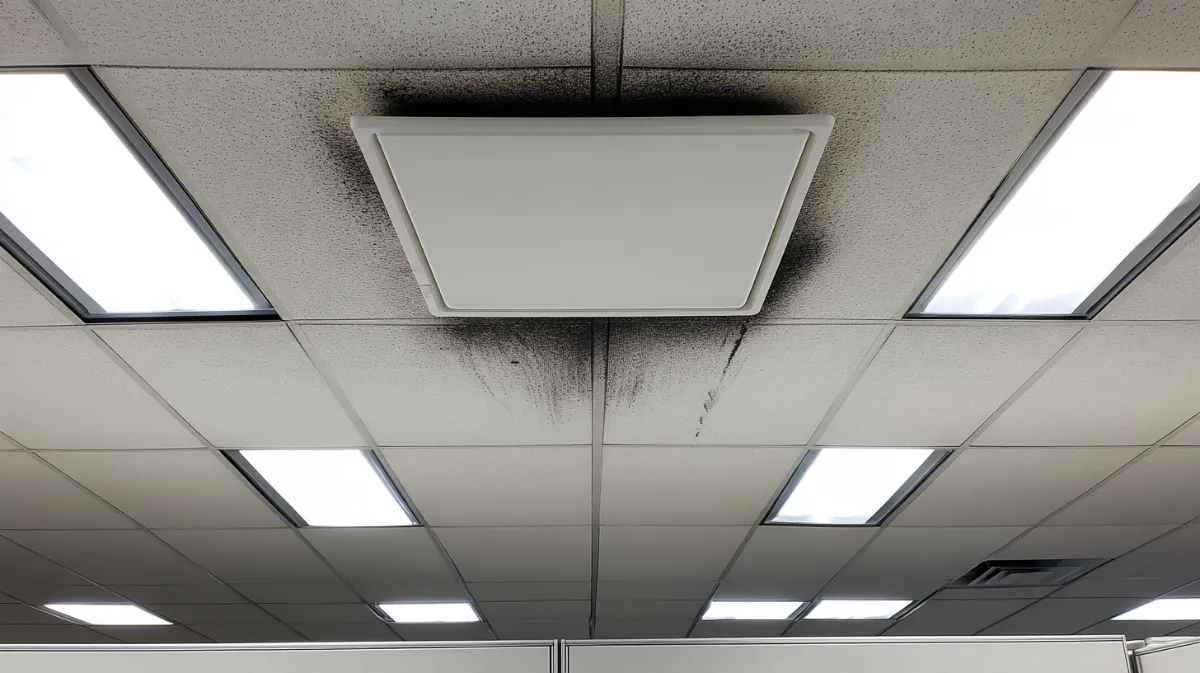
The complaints usually reach you sideways. Someone at the front desk says the office smells stale on Monday mornings. A tenant sends a photo of black streaks around a ceiling diffuser. The filters in the rooftop unit are loading up twice as fast as they did last year. In a commercial building, the air system runs longer hours and serves more people than any house, and the ductwork above the ceiling tiles is easy to forget. We clean it for businesses and property owners across the valley, from the industrial area in White City to storefronts and offices in Phoenix and along the I-5 corridor.
This page explains when a building is due, how commercial systems differ from the one in your house, how we schedule the work and how often it needs repeating. For a single rental house, our HVAC system cleaning page is the better fit.
When a Building Is Due
Visible dust around supply diffusers is the clearest sign, along with dark streaks on the ceiling tiles next to them. Filters that clog faster than they used to mean the returns are carrying more than they should. Complaints that cluster in one zone, such as stuffiness, odors or uneven temperatures, often trace to a section of duct that's restricted. Certain events make cleaning a near certainty: a tenant build-out or remodel, a roof leak that reached the ductwork, a pest problem, or a change of use, like a warehouse bay becoming office space. Many owners also clean between tenants so the next lease starts with a documented clean system.
How Commercial Systems Differ
Scale is the obvious difference, but layout matters more. Most small commercial buildings here are served by packaged rooftop units that push air down into a trunk above the ceiling, then out through branch lines to diffusers. Many use the space above the ceiling tiles as the return path, so dust on top of the tiles is part of the air system too. Larger buildings add dampers, variable air volume boxes and reheat coils, all of which have to be cleaned around without knocking them out of adjustment. One thing we don't do is kitchen exhaust. Restaurant hoods carry grease, fall under a separate fire code and need a hood cleaning company. We handle the heating and cooling ductwork in the dining room and offices.
How We Schedule the Work
We start with a site visit and, when you have them, a look at the mechanical drawings. You get a written scope that lists each unit and zone, so you know exactly what's included. Work is done evenings, weekends or in phases by floor or suite, whichever keeps your people working. Each zone is sealed off and put under negative pressure while it's cleaned, and desks and equipment under open ceiling areas are covered. Access panels we install are sealed and labeled for the next service. At the end you receive a report with photos of each section before and after, which is useful for tenants, insurers and anyone who asks what was done.
How Often Commercial Ducts Need It
There isn't one number. NADCA's standard calls for inspecting commercial systems on a regular schedule and cleaning when the inspection shows buildup, and that's the sensible way to budget for it. An office with good filtration may go five years or more. Buildings with heavy foot traffic, dust-producing work or lots of outside air need it sooner. Medical and dental spaces usually set their own tighter schedules. Changing filters on time and keeping the rooftop units serviced stretches the interval more than anything else.
Apartment buildings and laundromats have one more pipe to think about, and our dryer vent cleaning page covers shared and multi-story vents.
Frequently Asked Questions
Yes. Most of our commercial work happens on evenings and weekends. Larger buildings are split into phases so only one area is closed off at a time, and each area is put back together before the next workday.
Every commercial job ends with a written report: the scope, the units and zones cleaned, photos from inside the ducts before and after, and notes on anything we found that needs repair. Property managers keep it on file for tenants and insurers.
We do. A turnover is the easiest time, since the unit is empty and the registers are easy to reach. Owners often have the ducts and the dryer vent done together, so the next tenant starts with both clean.