
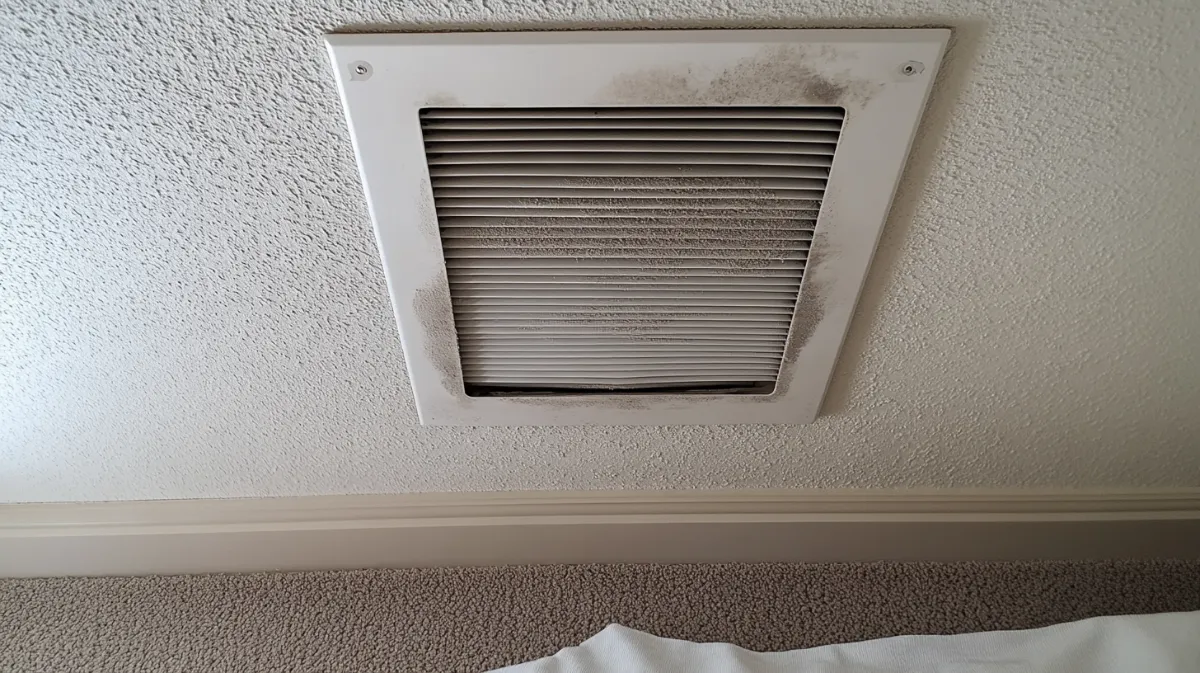
You change the furnace filter and a month later it's gray again. There's a fine layer of dust on the dresser two days after you wiped it down. When the heat comes on in the morning, the first few seconds smell stale. Those are the everyday signs that the ductwork has built up more than a filter can deal with. It happens in every forced-air house eventually, and it happens faster here. Homes in Medford and Ashland sit through weeks of wildfire smoke in a bad summer, and the system keeps pulling that air through the whole time. What settles in the ducts stays until somebody removes it.
This page covers how to tell whether your ducts need attention, what a proper cleaning involves, how our visit goes from start to finish and how often the job really needs doing. If your laundry has been taking longer to dry, that's a different pipe with a different fix, and our dryer vent cleaning page covers it.
Signs Your Ducts Are Due
Start with the registers. Unscrew one from the floor or wall and shine a light inside. A light film is normal. A felt-like layer you could write your name in means the ducts are due. Other signs show up around the house. Dust streaks fan out from the ceiling vents. One bedroom never gets warm because its run is half blocked. You find mouse droppings near a floor vent, or you smell something musty only when the fan is on. Timing matters too. If you just finished a remodel, sanded floors or bought a home that sat empty for a while, assume the ducts took in more than their share.
Source Removal, in Plain English
The industry term for a real duct cleaning is source removal. It means the dirt leaves the building instead of getting stirred around. Two things have to happen at once. A large vacuum connects to the trunk line near the furnace and puts the whole system under negative pressure, so air only moves one way, toward the machine. Then each run is agitated with a tool matched to the duct. Sheet metal can take a spinning brush. Flex duct, the foil-and-wire tubing in most attics and crawl spaces, tears easily and gets air whips or soft bristles instead. Duct board gets the gentlest treatment. A crew that runs one stiff brush through everything is going to damage something. This is the method laid out in NADCA's cleaning standard, and it's the one we follow.
How Our Visit Goes
We start with a walk-through to count the vents, find the furnace and check how the ducts are reached. Floors get covered and corners get guards where the hose runs. We cut a small access opening in the trunk line, connect the vacuum and seal the registers so the suction stays strong. Then we work one run at a time, from the farthest vent back toward the furnace, supply side first and returns after. Each register cover is washed before it goes back on. The access opening is closed with a sheet-metal patch and sealed. Most homes take two to four hours. Before we leave you'll see photos from inside the ducts, taken before and after.
How Often a Cleaning Makes Sense
Less often than some companies will tell you. Most homes are fine with a cleaning once every three to five years, and a house with no pets, no smokers and a good filter can go longer. A few things move the date up: a heavy smoke season, a remodel or new flooring, a rodent problem, or water getting into the ductwork. Between cleanings, the cheapest thing you can do is change the filter on schedule. A pleated filter rated MERV 8 to 11 suits most home systems and catches the bulk of what would otherwise settle in the ducts.
Once the ducts are done, the furnace itself is the next place dust hides, and our HVAC system cleaning covers the blower and coil.
Frequently Asked Questions
It can if the wrong tool is used. Flex duct and duct board won't stand up to a stiff rotary brush, and old tape joints can pull apart under rough handling. We match the tool to the material and check each run before working it. If we find a section that's already crushed, torn or disconnected, we show you a photo and leave the decision on repairs to you.
Not as a matter of course. Removing the dust is what does the work, and most homes need nothing more. If there's mold growth or a rodent mess, a product registered for use in HVAC systems may make sense on bare metal, and we'll talk it through with you first. We won't fog a house just to add a line to the bill.
Don't count on a big drop from the ducts alone. The savings come mostly from the parts that move and exchange heat: a clean blower wheel and a clean coil. What duct cleaning does reliably is restore airflow to rooms on blocked runs and slow down how fast the filter loads. If lower bills are the goal, ask us to look at the blower and coil on the same visit.